http://www.nancycarlssonpaige.org/book-takingbackchildhood1.html
The more I read, the more shocking it is to me how our culture ignores solid research based evidence and instead embraces media and corporate influence.
I realize that the cards are stacked against us. The corporate machine has developed an all-pervasive influence and the unsuspecting parent can feel powerless against it. The research, however, is very clear. Our children need limited (or no) screen time and increase unstructured play time. All of them. Even the big kids and the "good" kids.
Creative play builds creative minds, but the outside influences can stifle it. The only remedy is to consistently enforce an environment where unstructured play occupies the largest proportion of time (except maybe sleep). This can be a huge energy shift, but I think, it maybe harder for parents than children. It will require that parents interact with their kids much more than in a media babysitting model. Quickly, however, the kiddos will learn to play with out you and you will have to play alone.
Keep in mind, as well, that most school programs do not support play. Creative thinking plays a limited role in an environment filled with requirements and testing. Unstructured after school play time is vitally important and provides a much better "reset" after classes are over than the traditional hour of TV before dinner. As we prepare for back-to-school, keep this in mind and I challenge you to go TV free during the school week. I promise you'll notice a positive difference!
Sunday, July 31, 2011
Thursday, July 14, 2011
Did you ever wonder? What the World Eats
http://www.randomhouse.com/book/198143/what-the-world-eats-by-faith-daluisio
Reading statistics about nutrition, poverty and world hunger just can't paint the same picture as photography. Profiling families from around the world, the authors photograph the family in their home, surrounded by a weeks worth of food.
Costs vary from $500 to $1.50 and nutritional value varies as well. Seeing the packages and produce all displayed makes the disparity very obvious. It is amazing how many brands have a global presence.
I am sure that some families adjusted the food displayed, some making it more wholesome than usual, others adding "special" foods for their guests. Even so, the differences are striking.
I would love to see this photographic research replicated with diverse American families. I would hypothesize that families in Arizona, New York, Alaska and Nebraska would demonstrate some telling data about the nutritional crisis in the United States as well.
Reading statistics about nutrition, poverty and world hunger just can't paint the same picture as photography. Profiling families from around the world, the authors photograph the family in their home, surrounded by a weeks worth of food.
Costs vary from $500 to $1.50 and nutritional value varies as well. Seeing the packages and produce all displayed makes the disparity very obvious. It is amazing how many brands have a global presence.
I am sure that some families adjusted the food displayed, some making it more wholesome than usual, others adding "special" foods for their guests. Even so, the differences are striking.
I would love to see this photographic research replicated with diverse American families. I would hypothesize that families in Arizona, New York, Alaska and Nebraska would demonstrate some telling data about the nutritional crisis in the United States as well.
Wednesday, July 13, 2011
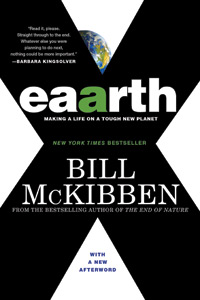
Eaarth
http://www.billmckibben.com/eaarth/eaarthbook.html
This is a scary book. It is scary that authors like Bill McKibben have been writing about our environment and suggesting changes in behavior for decades and no significant changes have been made. Even scarier is the premise given here, that environmental change is irreversible, we have passed the point of no return.
Earth is gone, and has been replaced by the less-hospitable Eaarth. Sounds like science-fiction doesn't it? Unfortunately, this assertion is supported by numerous studies and statistics.
Have you seen the record breaking wildfires in the west this summer?
Check this out:
This is a scary book. It is scary that authors like Bill McKibben have been writing about our environment and suggesting changes in behavior for decades and no significant changes have been made. Even scarier is the premise given here, that environmental change is irreversible, we have passed the point of no return.
Earth is gone, and has been replaced by the less-hospitable Eaarth. Sounds like science-fiction doesn't it? Unfortunately, this assertion is supported by numerous studies and statistics.
Have you seen the record breaking wildfires in the west this summer?
Check this out:
How about the record-high temperatures and dry weather?
Here it is:
These are not warnings of potential climate change. They are not possibilities for a future of unknown distance. These are not problems that your grandchildren will face. These changes have already taken place. If we continue on our current path, new and more drastic challenges will loom.
Are you scared yet?
Thursday, July 7, 2011
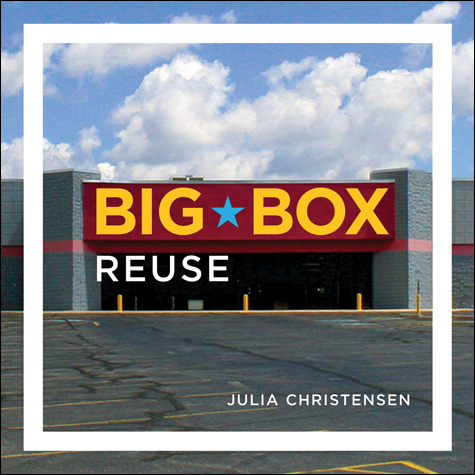
Big Box Re-Use
http://www.bigboxreuse.com/book/
I think the problems with so called "big box stores" are becoming more and more evident all the time. The recent court decision condoning sexist practices by one of our largest national employers has brought my attention back to the problem. I refuse to shop at that particular store, but avoiding all the big box chains completely is nearly impossible.
Another developing problem is the aging and expansion of these stores. After driving all the smaller vendors from a community and operating out of the initial big-box location for a few years business starts to stagnate. So, what is the logical next step? A "super store". As chains are moving to larger and more sprawling locations they are leaving behind the empty shell of that first "big box".
Julia Christensen noticed that a few communities are reclaiming those boxes in creative and interesting ways. From a town hall, to a skate park, to a school, she profiles the way that the forest of innovation and entrepreneurship is slowly reclaiming the strip-mined main streets of communities all over our country.
With a wiki on her website, Christensen invites us all to recognize our own communities as we re-use and re-claim our own areas from the shadow of the big box.
I think the problems with so called "big box stores" are becoming more and more evident all the time. The recent court decision condoning sexist practices by one of our largest national employers has brought my attention back to the problem. I refuse to shop at that particular store, but avoiding all the big box chains completely is nearly impossible.
Another developing problem is the aging and expansion of these stores. After driving all the smaller vendors from a community and operating out of the initial big-box location for a few years business starts to stagnate. So, what is the logical next step? A "super store". As chains are moving to larger and more sprawling locations they are leaving behind the empty shell of that first "big box".
Julia Christensen noticed that a few communities are reclaiming those boxes in creative and interesting ways. From a town hall, to a skate park, to a school, she profiles the way that the forest of innovation and entrepreneurship is slowly reclaiming the strip-mined main streets of communities all over our country.
With a wiki on her website, Christensen invites us all to recognize our own communities as we re-use and re-claim our own areas from the shadow of the big box.
Wednesday, July 6, 2011
Herstory
At the risk of being redundant, I wanted to share one more women's history reference for young people. Every time I look through a book like this I am shocked by the number of important women who were not included in my high school curriculum. I realize that there have been more important historical figures of all races and genders than could possibly be discussed in four years of high school, but the fact that they skew male and white in more and more evident to me all the time.
This book profiles famous and not-so-famous women through out world history and pairs each with a portrait and a sample of her work. What a great way to introduce young women (and men) to the possibilities of their potential!
Take a look at your book shelves. How many books do you have about famous dead white guys? Don't you think you could make room for at least one about the ladies? Once you start to notice, its hard to return to complacency. Teach yourself a more complete world history; then teach others.
This book profiles famous and not-so-famous women through out world history and pairs each with a portrait and a sample of her work. What a great way to introduce young women (and men) to the possibilities of their potential!
Take a look at your book shelves. How many books do you have about famous dead white guys? Don't you think you could make room for at least one about the ladies? Once you start to notice, its hard to return to complacency. Teach yourself a more complete world history; then teach others.
Tuesday, July 5, 2011
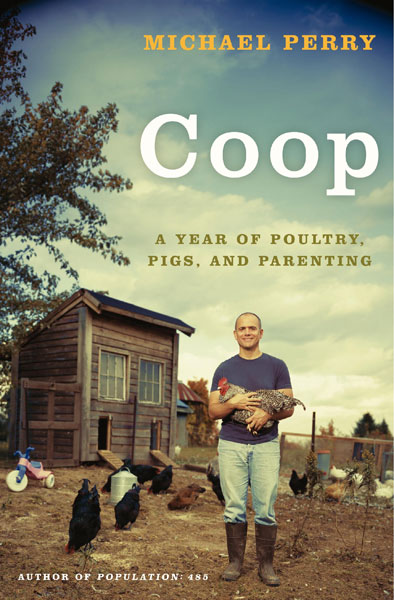
Coop
http://sneezingcow.com/
I have a small obsession with anyone who finds a way to make a living doing what they love. It seems like most of us have hobbies and a job and n'ere the twain do meet.
I am lucky, I love teaching and I love being a mom. I just wish I had twice as much time to do both. Since I haven't figured that out yet, instead I read about people who seem to have so much time that they are even able to reflect and write about their lives. What luxury!
Michael Perry is an absolute master of this magical use of time. He is a prolific writer, musician and performer with a fabulous website and a good relationship with his family and neighbors. In this book he chronicles his beginnings with livestock and his experiences as a father, especially the challenge of balancing both. He is unafraid of his mistakes and his acknowledgement of his shortcomings is what makes this book interesting and inspiring, rather than self-indulgent.
Perry works hard at doing what he loves and is successful. Who wouldn't enjoy reading about a life like that?
I have a small obsession with anyone who finds a way to make a living doing what they love. It seems like most of us have hobbies and a job and n'ere the twain do meet.
I am lucky, I love teaching and I love being a mom. I just wish I had twice as much time to do both. Since I haven't figured that out yet, instead I read about people who seem to have so much time that they are even able to reflect and write about their lives. What luxury!
Michael Perry is an absolute master of this magical use of time. He is a prolific writer, musician and performer with a fabulous website and a good relationship with his family and neighbors. In this book he chronicles his beginnings with livestock and his experiences as a father, especially the challenge of balancing both. He is unafraid of his mistakes and his acknowledgement of his shortcomings is what makes this book interesting and inspiring, rather than self-indulgent.
Perry works hard at doing what he loves and is successful. Who wouldn't enjoy reading about a life like that?
Friday, July 1, 2011
Packaging Childhood
http://www.packaginggirlhood.com/book.html
http://packagingboyhood.com/
As parents, it is our job to protect our children. Many people are uneasy about the media that our children are exposed to and the message that music, tv, magazine, books and toys send. Who designs these products? What in the purpose of the stereotypes that they perpetuate? In this pair of books, the authors strive to answer those questions and are disturbed by the answers.
Products of all kinds are designed for and marketed to our children with the expressed purpose of shaping and developing life-long consumers. By categorizing kids and then convincing them that products are needed to continue to remain in that category children are taught from a young age that their value lies in their purchasing power. Every consumer product that we buy for our kids was designed with product loyalty in mind. Even things like snacks and art supplies are designed to target a "type" of child. The nefarious ulterior motives are so overwhelming that it is tempting to swear off all purchasing and weave your own cloth.
Fortunately, the authors realize that this is not realistic and they provide resources to counter corporate influence. In addition to describing the worst offenders they provide talking points to guide conversations. If your son loves GI Joe, it isn't realistic to forbid it. Instead, a thoughtful discussion about the macho stereotypes (or several) along with creative multi-dementional play can show your children how to break out of the marketed box. Sure, Joe fights the bad guys, but he also needs to go grocery shopping and likes to paint!
My favorite resource in these books are the lists of "safe" media. Children love books, music and movies and so do I, so swearing off all of them is unrealistic. If you can balance Cinderella with The Paper Bag Princess your children can make informed decisions about the fairy tale life. Media are listed by topic and age group, making these books a life-long resource and go-to library list.
So, now for your input, leave a comment telling me your favorite stereo-type shattering media resources (book, music, movie, etc.). Tell me the title, why you like it and what age group it is appropriate for. Check our the suggestions and Happy Reading!
http://packagingboyhood.com/
As parents, it is our job to protect our children. Many people are uneasy about the media that our children are exposed to and the message that music, tv, magazine, books and toys send. Who designs these products? What in the purpose of the stereotypes that they perpetuate? In this pair of books, the authors strive to answer those questions and are disturbed by the answers.
Products of all kinds are designed for and marketed to our children with the expressed purpose of shaping and developing life-long consumers. By categorizing kids and then convincing them that products are needed to continue to remain in that category children are taught from a young age that their value lies in their purchasing power. Every consumer product that we buy for our kids was designed with product loyalty in mind. Even things like snacks and art supplies are designed to target a "type" of child. The nefarious ulterior motives are so overwhelming that it is tempting to swear off all purchasing and weave your own cloth.
Fortunately, the authors realize that this is not realistic and they provide resources to counter corporate influence. In addition to describing the worst offenders they provide talking points to guide conversations. If your son loves GI Joe, it isn't realistic to forbid it. Instead, a thoughtful discussion about the macho stereotypes (or several) along with creative multi-dementional play can show your children how to break out of the marketed box. Sure, Joe fights the bad guys, but he also needs to go grocery shopping and likes to paint!
My favorite resource in these books are the lists of "safe" media. Children love books, music and movies and so do I, so swearing off all of them is unrealistic. If you can balance Cinderella with The Paper Bag Princess your children can make informed decisions about the fairy tale life. Media are listed by topic and age group, making these books a life-long resource and go-to library list.
So, now for your input, leave a comment telling me your favorite stereo-type shattering media resources (book, music, movie, etc.). Tell me the title, why you like it and what age group it is appropriate for. Check our the suggestions and Happy Reading!
Thursday, June 30, 2011
Lost and Found
As a speaker and author most of Geneen Roth's career has focused on spirituality and women's relationships with with food. She discovered that in her own life overeating and dieting were manifestations of her spiritual instability and her discomfort in her own skin.
Interestingly, just as her career as a speaker was really taking off, Geneen was hit with a huge financial blow. All of her life savings were lost as the Bernie Madoff scandal came to light and she found herself with massive debt and only $5000 in the bank.
Now, at this point I must admit I wasn't really feeling any sympathy or connection with the author. When I have $5000 in the bank I feel pretty flush, so you have to understand its all a matter of perspective. This great loss lead to a great gain in self-awareness, which is the primary focus of this book. Roth realized that she had been maintaining a dis-functional relationship with money that paralleled her feelings about food. Guilt and secrecy surrounded both topics and her planned obsolescence had led her to crisis.
She began to ask her students and friends about their money and found that for many of them money was a black hole of uncertainty and a topic to be avoided at all costs. A healthy in and out relationship of needs and wants with no assigned emotional value was virtually unheard of in her discussions.
Geneen realized that finances and food, for many women, are parallel categories of disfunction. The taboo and competition that surround both topics leads us to hide the problems from each other, allowing the cycle to continue. Open and honest discussion can break down those barriers and we can learn to support each other as we heal spiritually, physically and financially.
As Geneen Roth says;
"But it's not too late. It's possible to understand money as an expression of our life's energy and to use it to support life rather than to destroy it.
It's possible to redefine what making a profit actually means and recognize that as long as one person wins and another person loses, no one wins.
It's possible to understand what happens to our money and to use it to reflect what we value most instead of turning it over to questionable characters and complicated investments.
It's possible to find what was never lost to begin with - our ability to feel, give, receive, know, question, learn, change- and to allow that to be the wellspring of our worth. When we spend as much time investing in our inner lives as we do in getting and having more, how we live on this earth and inside our bodies will change. "
Monday, June 27, 2011
Chick Days!
Jenna Woginrich, author of Made from Scratch, is my hero!
A young single woman, running her own farm-stead and writing about the experiences she is a perfect example of a fulfilled life.
Her second book, illustrated with photographs by Mars Vilaubi, beautifully describes the development and growth of three working pet hens from chick to chicken. Showing the physical development and the development of individual personalities gives the reader week by week insight into the raising of chickens as well as a feeling of connection to the authors as they build a relationship with their animals.
I appreciate the beauty of this book, Woginrich admires the day to day country routines with an artist's eye and the practical nature of a farmer, a fabulous combination! Her connection to her animals and broad perspective of the natural cycles of farm life make a practical, beautiful and personal manual for the backyard farmer.
This book is also a great way to introduce children to the process of raising chickens, as the photographs will capture the attention of even the very young. My little ones admire them again and again!
Friday, June 24, 2011
Ahhh... Summer!
This little guy has been our neighbor for quite a while - isnt he cute?
Sunday, May 29, 2011
Thursday, May 19, 2011
Planet Home
Jeffrey Hollender, co-founder of Seventh Generation, has written the ultimate guide to a green home. This book stands apart from other environmentally friendly cleaning manuals with its holistic and far-reaching suggestions.
Rather than merely suggesting chemical-free and low impact methods of cleaning and environmentally friendly alternatives for everyday disposable items, Hollender gives a broad view of the home and the myriad ways our lives are impacted by waste and chemicals.
He suggests a comprehensive approach to greener living, one that involves community, careful carbon consumption, chemical-free living and a local economy. By using a broad approach, he suggests that we are less likely to sabotage our own efforts. For example, organic produce looses some of its value when it is stored in plastic bags, cut on a plastic cutting board that is cleaned with chemicals, and then paired with an imported wine.
Overhauling our consumption patterns can be overwhelming, and I am not suggesting that it is possible to "green" your home in every aspect that is discussed. I do think, however, that there is tremendous value in a fresh perspective, which this book clearly provides. I tend to become detail oriented, ignoring the big picture to the detriment of the end goal of a more sustainable, healthier lifestyle. Stepping back and finding those overlooked areas can make a big difference!
Tuesday, May 17, 2011
One Makes the Difference
The thing that impressed me most all those years ago was her confidence that one young woman (she was 26 at the time) could make a difference. So often young people are discouraged from speaking out, their opinions are discounted as naive and unrealistic, and in the process we teach them that they can't change anything.
Julia Butterfly Hill is a example to the contrary. As a young woman she refused to take no for an answer and used nonviolent protest methods to raise awareness for a cause close to her heart. There were setbacks. She needed help and there were times when she thought she might not succeed, but by persevering in a way that only a young, idealistic person can, she managed to save her tree (Luna) and arguably more importantly she was able to raise national awareness for the preservation and conservation of the giant redwoods.
This, her second book, is meant to reach out to young people. Rather than accepting the world they are given or accepting feelings of disenfranchisement, she provides suggestions for making a difference. None of these suggestions are ground breaking.
The radical notion, to me, is the idea that anyone can truly change the world for the better. Regardless of age, gender, race or status, we all need to hear that message and to share it with each other. You can make a difference. I can make a difference. No excuses now, what we do does matter and you never know who may be watching and learning from you.
http://www.juliabutterfly.com/en/about-julia
Monday, May 16, 2011
Love Your Country
MoveOn.org is one of my favorite internet movements. Actually, its one of my favorite political action groups that just happens to be internet based. Grass roots lobbying on issues that matter in accessible to everyone through this easy to navigate site. Making the leap from online to real life isn't always easy, but in this book members of Move On share their real life experiences making a difference in our wonderful country.
We often forget the power of one voice and the impact a small group can have on the greater good. If you are looking for inspiration and affirmation, this book is a great place to start. Then, go out and love your country. Change the world!
Saturday, May 14, 2011
Everyone wants to save money. When you think you are doing everything you can and there is no where left to trim in your budget, a book like this one comes along and points out all the areas where padding remains.
As with most economic theories, there are some ideas and suggestions in this book that I like better than others. It is unlikely that I would grocery shop only once a month, freezing milk to keep it on hand. However, the authors point out that the grocery budget is often the easiest to cut and the easiest to completely over spend at the same time. By planning meals and shopping only twice a month (with in between milk and egg only stops) I am able to spend much less that I was with a once or twice weekly trip. If you are looking for inspiration for your frugal habits, this book can provide a kick start in the right direction.
Living off the grid
Friday, May 13, 2011
Get Out!
With an easy to read format and lots of kid friendly suggestions this book is a great resource for the earth conscious family. The simple ideas and projects are designed to teach ecology and environmental awareness while involving the whole family. The best feature, in my opinion, is the assumption that whole families, parents and children, will read this book and try these activities together. So often, activities are suggested that involve an in-equal level of involvement for all family members. Either the children explore and parents observe, or parents act while children look on. This book assumes real cooperation and collaboration, and the doing it in nature makes for the perfect family outing. Playing together and exploring the natural world, what could be better?
Simpler Living
This book is a beautiful resource for simplifying your life. Everything from household organization and cleaning to spirituality and the workplace are covered with beautiful illustrations. When we talk about simple living we don't always consider our inner lives and our time spent outside the home, but a truly simple life is extended into all areas. This book gives suggestions for changes to daily life that allow us to appreciate the simple things. When we surround ourselves with fewer items of great beauty and quality we enjoy using them, even if they are used for mundane tasks. This allows us to focus on the present and to reflect on the positives in our lives. Taking the time to do this enriches our lives much more than things or activities can ever do.
Wednesday, May 11, 2011
Attachment Research
So many people discount attachment parenting as permissive, ineffective and wishy-washy. I often find myself explaining why spanking, isolated time-outs and tv in the bedroom don't fit with my parenting philosophy and I wanted some research to share with the mainstream, "super-nanny", spare the rod parents who are my friends and colleagues. You would think that I would have gotten a great foundation in this research in my six years of post-secondary education; but attachment isn't encouraged in public schools, it is something that some teachers do naturally and others are baffled by.
This book was written for parents, but I think it would be a fabulous addition to child development and child psychology curriculum as well. By understanding how attachment is critical to a child's development, parents and educators can assign the appropriate value to the explicit development of secure relationships. This book clearly sites causes of disrupted attachment in addition to providing concrete methods of strengthening the bond. A securely attached child is ready to learn, grow and experience the world. Developing that attachment at home and in school allows the child to spread his or her wings and reach full potential without fear.
Positive classroom climate, minimized discipline concerns and increased higher-level thinking follow logically in an environment of secure teacher-student attachment. Building those connections helps children become confident adults who are able to build connections themselves. Shouldn't that be a skill we are explicitly teaching?
http://www.newtoncenter.net/attachment_connection.html
This book was written for parents, but I think it would be a fabulous addition to child development and child psychology curriculum as well. By understanding how attachment is critical to a child's development, parents and educators can assign the appropriate value to the explicit development of secure relationships. This book clearly sites causes of disrupted attachment in addition to providing concrete methods of strengthening the bond. A securely attached child is ready to learn, grow and experience the world. Developing that attachment at home and in school allows the child to spread his or her wings and reach full potential without fear.
Positive classroom climate, minimized discipline concerns and increased higher-level thinking follow logically in an environment of secure teacher-student attachment. Building those connections helps children become confident adults who are able to build connections themselves. Shouldn't that be a skill we are explicitly teaching?
http://www.newtoncenter.net/attachment_connection.html
Chickens in your backyard
I recently met a farmer who offered to give me his laying hens in the fall when he culls for winter. I am so excited, since I have wanted to avoid razing chicks but still would like to have eggs from my own back yard. I have the summer to build a coop, and to convince my sister that she can still come over even though she hates birds of all kinds. I am more confident about the coop than the sister, but we'll see!
Since I want to keep birds, I have been looking for resources for a while. This book is a great mix of humorous anecdotes and practical suggestions for the whole life cycle of backyard chickens. Some books make it seem like a tricky project, but this one illustrates the hardiness and flexibility of typical breeds and encourages, rather than discourages a small, one household flock. I am excited to try this out, now I just need to learn to build a chicken coop....
Friday, May 6, 2011
The New Pioneer
This new magazine is just getting started, but it seems to be a little different from the rest. The pictures are beautiful and informative and the article focus on off grid living and self-sufficiency. Unlike some of the other publications I have seen, this one has something of a survivalist feel. Articles on firearms and emergency food supplies accompany gardening information and alternative building techniques. If Mother Earth News and Countryside had a baby, this magazine would be it! I hope it will become established and be published on a regular basis, the perspective given in this issue is unique.
Thursday, May 5, 2011
Women's History
The effect that history has had on the lives of American women is often overlooked. Children go off to college with out a clear understanding of the women's rights movement, or the events that have attempted to level the field for our girls. We don't teach our young people about the Equal Rights Amendment that has yet to be ratified or about the Fair Pay Act which acknowledges that we are still facing gender inequality in this country today. Kids complain about Title IX and the way it had changed cheerleading and sports offerings. They don't know how hard girls had to fight to be allowed to play at all!
This book is written for a middle level reader and tells the story of American women from the founding mothers to the present day. You will be surprised how much of this information you don't remember from history class and you will want to share it with the young people in your life.
Wednesday, May 4, 2011
Too Much
People form emotional attachments to their stuff. We keep baby clothes that remind us of babies, dresses that remind us of proms and knick-knacks that remind us of all sorts of life events. I can be hard to separate that stuff from the memories that go with it. Tossing the stuff can feel disrespectful to the memories. So we keep it. It gathers dust. Then we find ourselves with too much stuff. This book encourages us to cherish our memories and purge the stuff that goes with them. The author reminds us that our memories can not be destroyed, and we don't need physical reminders of the truly important events.
Clearing our homes of the unimportant encourages us to clear our lives of the unimportant as well. When we surround ourselves with useful, beautiful objects that we value, we begin to place quality above quantity in all aspects of our lives. In this world of constant excess a little simplicity can be a very beautiful thing!
http://www.peterwalshdesign.com/booksTooMuch.php
Clearing our homes of the unimportant encourages us to clear our lives of the unimportant as well. When we surround ourselves with useful, beautiful objects that we value, we begin to place quality above quantity in all aspects of our lives. In this world of constant excess a little simplicity can be a very beautiful thing!
http://www.peterwalshdesign.com/booksTooMuch.php
Tuesday, May 3, 2011
Self Sufficient-ish
I am naturally self sufficient-ish. I like to do things for myself and take pride in knowing what needs to be done and how to do it. Sometimes this is called a type-A personality. Some people call it bossy. I prefer self sufficient! This bible is the how-to manual for taking care of yourself and your environment. Written in England, it is the result of practice, research and blogging by brothers who are interested in a lifestyle that is close to the earth and allows people to rely on themselves for basic needs. Some cultural differences are evident; did you know that British zucchinis are called courgettes? From the French...
Despite the learning curve, everything from gardening, composting and cooking to cloth diapering and gray water recycling is detailed in a low-pressure manner that allows the reader to decide how far they are willing to go. Not everything suggested in this book meets codes in my area (New York is notoriously strict) but the enthusiasm and enjoyment that the authors express through their writing make this an encouraging read, regardless.
http://www.selfsufficientish.com/
Despite the learning curve, everything from gardening, composting and cooking to cloth diapering and gray water recycling is detailed in a low-pressure manner that allows the reader to decide how far they are willing to go. Not everything suggested in this book meets codes in my area (New York is notoriously strict) but the enthusiasm and enjoyment that the authors express through their writing make this an encouraging read, regardless.
http://www.selfsufficientish.com/
Monday, May 2, 2011
The Power of Play
Elementary school classrooms are all business. Academic expectations have risen at all levels and the pressure is being felt even in kindergarten. Five year old children are routinely expected to sit for extended periods of time working on small motor tasks at the expense of their creativity and gross motor exploration. As an educator and a parent I struggle with these expectations that seem to stifle my children and discourage their innate love of learning.
It is one thing to say that I wish the children had more unstructured classroom time to explore the materials and interact with each other. It is another entirely to be able to support that desire with research and to be able to share that research in a comprehensive and unequivocal manner.
This book begins with Erikson's stages of development and describes how children, through unstructured play, learn to navigate the world around them, build empathy, and create a strong sense of self. The author sites examples of his own children, as well as children he has encountered in his clinical practice as he emphasizes the power that child-directed, creative play can have in development.
A child at play with simple blocks or scarves may seem to be learning less than one with flash cards or letter stencils but, as Maria Montessori suggested, children who are given simple materials and the freedom to explore will scaffold their own learning. By learning through play children build connections and knowledge that is authentic and real-world applicable. Playing together allows children to learn from each other and to develop empathy and an understanding of others while building mathematical, scientific and linguistic connections. Rote memorization and scripted lessons may get results on standardized tests, but the implications for creative thinking and cross curricular extrapolation leave me cold.
So, let your children play. Play with them, play simple and play often!
http://en.wikipedia.org/wiki/David_Elkind
It is one thing to say that I wish the children had more unstructured classroom time to explore the materials and interact with each other. It is another entirely to be able to support that desire with research and to be able to share that research in a comprehensive and unequivocal manner.
This book begins with Erikson's stages of development and describes how children, through unstructured play, learn to navigate the world around them, build empathy, and create a strong sense of self. The author sites examples of his own children, as well as children he has encountered in his clinical practice as he emphasizes the power that child-directed, creative play can have in development.
A child at play with simple blocks or scarves may seem to be learning less than one with flash cards or letter stencils but, as Maria Montessori suggested, children who are given simple materials and the freedom to explore will scaffold their own learning. By learning through play children build connections and knowledge that is authentic and real-world applicable. Playing together allows children to learn from each other and to develop empathy and an understanding of others while building mathematical, scientific and linguistic connections. Rote memorization and scripted lessons may get results on standardized tests, but the implications for creative thinking and cross curricular extrapolation leave me cold.
So, let your children play. Play with them, play simple and play often!
http://en.wikipedia.org/wiki/David_Elkind
Sunday, May 1, 2011
Playful Parenting
What if playing with your children could decrease arguments, increase cooperation and help your child grow into a strong, independent, empathetic adult? Sound too good to be true? In Playful Parenting, the author gives specific examples of guided play that can help you to form a strong bond with your child and teach interpersonal skills in a fun playful manner. My favorite advice involves weapons and war play. With two boys I see a lot of this kind of play and I struggle with the appropriate reaction. I don't want my children to hurt others, or to think of guns as toys, but I understand the need to play fighting and aggression. Lawrence Cohen suggests that rather than forbid this type of play, parents should join in. By joining the war, we can turn the play from me against you, to cooperative action. If your child pretends to shoot you, you can pretend it was a love ray and smother them with kisses. Or, you can pretend to be injured and ask them to be your doctor.
If he or she insists on fighting, be on his team and create a strategy. Ambush the enemy, capture the stuffed animal army, whatever it takes to be included in the game. By doing this, it becomes a shared experience, instead of solitary violent play. Children lean so much more this way than they do in time out! I wish all parents were willing to meet their children on their level (the floor), rather than ignoring or punishing undesirable behaviors. The world would be a more peaceful place!
http://www.playfulparenting.com/
If he or she insists on fighting, be on his team and create a strategy. Ambush the enemy, capture the stuffed animal army, whatever it takes to be included in the game. By doing this, it becomes a shared experience, instead of solitary violent play. Children lean so much more this way than they do in time out! I wish all parents were willing to meet their children on their level (the floor), rather than ignoring or punishing undesirable behaviors. The world would be a more peaceful place!
http://www.playfulparenting.com/
Saturday, April 30, 2011
What kind of world are you buying?
Written for young people, this book is a fabulous resource for consumers of all ages. From clothing to chocolate to electronics Mara Rockliff discusses the environmental and human impact of our conspicuous consumption habits. With an attractive, accessible format this book provides resources for action and talking points along with its damning assessment of world wide mass production. Readers are empowered to change the world through their power as consumers and examples are given of young people making a difference. A comprehensive list of films, books and websites allows for further research and suggestions are made for grassroots actions. For example, the chapter on chocolate describes the conditions of child labors, gives options for buying fair trade and suggests activism through reverse trick-or-treating. (This involves passing out information and fair trade samples at each house as you trick-or-treat. Genius!) There are only a few must-purchase books in this world, but I am adding this one to my list!
http://mararockliff.com/getreal.thebook.html
Friday, April 29, 2011
Don't Worry!
Sorry I haven't posted in a while! I took a week off for screen-free week, and then my darling son dumped a glass of water on my laptop. So... my typing ability has been impaired. I will be back at it full steam as soon as I can! Happy Spring!
Thursday, April 14, 2011
Pay it down!
I've read a few books about debt. This one is more moderate than some others I have seen, but seems realistic and shares some valuable ideas. The premise here is that by finding an extra ten dollars a day and applying that money to your debt you should be able to get out of debt and begin to save for the future. This assumes, of course, that you do not acquire any new debt.
The first point that caught my eye deals with credit card debt. The author tells us that on average, each credit card transaction ends up costing us $82 additional dollars. Every transaction. If that doesn't make you want to cut up your cards, nothing will!
The author suggests making a budget, finding that extra $10 a day, and then paying down credit card debt first, starting with the highest interest rate. This makes good financial sense, since the highest fees are paid to that card. Once the first card is paid, take the amount that you were making in payments and apply it to the next card.
Another suggestion that I liked, was using electronic bill pay from your primary account and depositing money for additional expenses in a second account. If you never touch the main account, you won't go off budget. Once it is all set up it should pretty much handle its self.
For any budget, getting organized and making the plan take a while, but once you get started seeing your efforts pay off they money saved and peace of mind will be its own reward.
Raising Freethinkers
This book contains wonderful resources for teaching the science of the universe, religions of the world, tolerance and understanding. There are also suggestions for building a community of freethinkers, something that can be difficult if you, like me, live in a conservative, religious area. This is one of the resources that I, as a parent, will return to again and again as my children grow and their needs change. It is so nice to know that there are others raising religion-free children with values and to be assured that despite outsiders fears to the contrary, it is possible, even probable, that my children will become moral, kind, and just adults with out the rules imposed by religious doctrine.
http://www.parentingbeyondbelief.com/
Wednesday, April 13, 2011
Made From Scratch
For some reason, before I started this book I thought it was a about crafts. I was mildly disappointed to find it is a memoir, but only for a minute! I soon discovered that the author Jenna Woginrich is someone I would love to have as a friend. She started out with window boxes and and progressed to a farm house with chickens, rabbits and gardens. She did this by herself while working a full time real job. I would guess that she didn't intend to be a roll model for young women, but anyone as successful as she, especially under the age of thirty, is doing just that. I enjoyed her sense of humor and individualism and I even tried her bread recipe. (Its in the oven now!) I plan to follow her blog too, I am sure she has more to share.
Tuesday, April 12, 2011
I really want some chickens!
Now, I know that these "For Dummies" books are kind of cliche, but I really thought that this one was useful. It covers ever thing from choosing chickens and getting zoning approval to housing, anatomy and butchering. This book is written for the beginner backyard hobbyist and is probably too basic for someone with chicken experience, but I think that the comprehensive information would be invaluable for me especially as problems and questions would arise. (They always do!) I plan to keep this handy as I start my chicken raising adventure; I have the feeling I'll need it!
Monday, April 11, 2011
Take Action!
If you are looking for a place to fight back in the war on moms and families, check out momsrising.org. Some of the issues addressed through this website are heath care, breastfeeding, family leave, toxins, child care and fair pay. They offer information on current action, contact forms for elected officials, information on these marginalized actions and support. If you have wondered if you are the only one wishing for a system that is supportive of families instead of working against them, then look no further. Sign up and let your voice be hear!
The War on Moms
Until recently, I had never heard of Phyllis Schafly. Then her name came up in two books that I read in quick succession. She has been a powerful force over the last 40 years in the war against moms. Ironically she is a working mother herself who has campaigned against equal rights for women every step of the way. The work that she and other conservatives have done to counter the women's rights movement has successfully sidelined the Equal Rights Amendment, limited access to reproductive healthcare and branded anyone who supports subsidized childcare or paid parental leave as a dangerous socialist.
If that is news to you, you need to read this book. I knew that the cards in the United States were stacked against mothers, but it isn't something that we talk about. The war on moms is fought quietly and under cover of misleading language. Looking at the systems that other countries have in place to support parents really illustrates the disparity between our sink or swim set up and places where paid maternity and paternity leaves are followed by flexible work schedules and high quality subsidized child care. Get ready to get angry, then go out and do something about it! Write some letters, call your congressmen, our children and families deserve to be the number one priority.
Saturday, April 9, 2011
Mini-Farming
I really enjoyed this book! It has the large size and beautiful pictures of a coffee table gardening book paired with sustainable suggestions and a focus on economic viability. The author is a practicing mini-farmer sharing his expertise and recipe for success. He defines a mini-farmer as a gardener with an emphasis on economics. It is easy to develop gardening as a very expensive hobby. This book suggests practices that can turn the costs into profits. By starting your own seeds, planting the maximum amount per square foot and not wasting resources a family of four can raise up to 85% of their food needs on a quarter of a acre. With a little more it is even possible to grow enough to sell or share. In addition to gardening the author also discusses raising chickens for eggs and meat as well as proper preservation methods. If you are interested in raising your own food and saving money doing it, this is an invaluable resource!
http://www.markhamfarm.com/
Friday, April 8, 2011
Unschooling
I am a public school teacher. I believe in public schools and support them completely. There is a part of me, however, that is always looking at options. Just because our schools are vitally important doesn't mean that there aren't other choices for learning that could work. I toyed with the idea of homeschooling my own children and that's when I learned about unschooling.
Unschooling is the ultimate in child centered education. Children are given free choice in their activities and parents must trust that they will learn from those activities. We are naturally curious creatures. In an unschooling model that curiosity is encouraged and expanded upon as children wish to discover more about a topic. I think the hardest part is for the adults to let go and allow the children to just explore. At first it may seem that they are learning nothing, but the desire for information will come. Ownership of the learning process ensures retention and a plethora of connections.
The commitment by parents and children to unschooling must be strong. Without it education could look a lot like vacation. But really, have you ever forgotten the things you saw on vacation? It really is all learning. For my family, public school is the way to go, but I try to look at our entire lives through unschooling eyes. Planning our weekends and our family events I encourage my children's interests while finding ways to expand what they know and show them how everything is connected. Teaching my kids to ask questions and seek answers, to absorb information and to look at the world in new and different ways will help them to become life-long learners both in school and out.
http://www.marygriffith.net/Site/UH_page.html
Unschooling is the ultimate in child centered education. Children are given free choice in their activities and parents must trust that they will learn from those activities. We are naturally curious creatures. In an unschooling model that curiosity is encouraged and expanded upon as children wish to discover more about a topic. I think the hardest part is for the adults to let go and allow the children to just explore. At first it may seem that they are learning nothing, but the desire for information will come. Ownership of the learning process ensures retention and a plethora of connections.
The commitment by parents and children to unschooling must be strong. Without it education could look a lot like vacation. But really, have you ever forgotten the things you saw on vacation? It really is all learning. For my family, public school is the way to go, but I try to look at our entire lives through unschooling eyes. Planning our weekends and our family events I encourage my children's interests while finding ways to expand what they know and show them how everything is connected. Teaching my kids to ask questions and seek answers, to absorb information and to look at the world in new and different ways will help them to become life-long learners both in school and out.
http://www.marygriffith.net/Site/UH_page.html
Thursday, April 7, 2011
Wild Things
I have two little boy wild things of my own. They are so sensitive and boisterous, loving and physical it can make my head spin! When I started to read this book, I was wary of the Christian overtones, but I soon found myself laughing out loud and reading to my husband the anecdotes about the authors' sons that were so similar to my own.
I love the way the authors combine structure and concrete thinking with emotional support and nurturing for all ages and stages of development. They advocate setting limits and expectations while building a strong emotional relationship with your son. So often the emotional needs of boys are underestimated because they tend to act them out in physical ways. The authors address the underlying causes and provide suggestions for helping boys to express their emotions in healthy ways.
Difficult topics are addressed with specific suggestions for discussing each, but the overarching message emphasizes the importance of having the conversations. Talk to your boys. Listen to them. Ask questions and find out how they really feel. Share your emotions and you will teach them to share their own. Start young and never stop. A parent that works to build this attachment will raise a man who is able to connect to his own children, and that is a beautiful thing.
http://www.stephenanddavid.com/home.html
Wednesday, April 6, 2011
No Impact
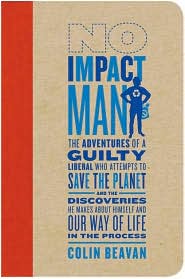
I recycle. I wash my sandwich bags and use them again. I hang my clothes on the line in nice weather and I cloth diaper. I compost, buy local and eat vegetarian. My family of five generates about one big bag of garbage per week, and I think we are pretty green, but we are certainly not no impact. Colin Beavan along with his wife and young daughter spent a year striving to have zero impact on the environment. No garbage. No carbon emissions. No waste. They turned off the electric and bought bikes. They stopped buy packaged food and only bought local. They even, toward the end, stopped using toilet paper. Now, that's a little far, in the grand scheme of things, but it could be done. Especially if you are already washing diapers! Now I doubt that you are interested in a completely impact-free lifestyle, but if you are interested in making some changes and challenging your consumption then I highly recommend this book along with its companion film and website. The Beavan family illustrates how much difference one family can make and what a great impact on your life no-impact living can have.
http://noimpactproject.org/
Tuesday, April 5, 2011
Are you ready to garden?
My seeds are started in the window, and the ground is starting to thaw out and turn to mud. We have had a few days where the sun was warm and we wanted to be outside for more than 15 minutes. Its this time of year that I start to get anxious for my gardens. Unfortunately, around here its not really wise to plant before memorial day, so I have a while to go. As I wait, I read.
When I came across this book, the format appealed to me right away. It includes gardening tips and suggestions for the whole year so there is always something to do, with out being too specific about dates. Every thing is based off the date of last frost (or at least the average date) and can therefore be adjusted to match various climates. The book is meant to be used as a workbook or journal, and has places to record your own dates as well as sections for taking notes. The authors provide planting suggestions for a variety of vegetables as well as information on common pests, diseases and soil conditions. They also cover tools, food preservation, and putting the garden to bed for the winter, something that many gardening books neglect. This book is not meant for a master gardener or a large scale grower, but rather for the backyard hobbyist looking for simple techniques and organization. It seems like one that could be turned to year after year as a resource and a record of progress.
http://www.storey.com/book_detail.php?isbn=9781603426947
When I came across this book, the format appealed to me right away. It includes gardening tips and suggestions for the whole year so there is always something to do, with out being too specific about dates. Every thing is based off the date of last frost (or at least the average date) and can therefore be adjusted to match various climates. The book is meant to be used as a workbook or journal, and has places to record your own dates as well as sections for taking notes. The authors provide planting suggestions for a variety of vegetables as well as information on common pests, diseases and soil conditions. They also cover tools, food preservation, and putting the garden to bed for the winter, something that many gardening books neglect. This book is not meant for a master gardener or a large scale grower, but rather for the backyard hobbyist looking for simple techniques and organization. It seems like one that could be turned to year after year as a resource and a record of progress.
http://www.storey.com/book_detail.php?isbn=9781603426947
Monday, April 4, 2011
House
Although this book is non-fiction, it reads like a novel. The author follows the construction of a house from design to completion from the perspective of the architect, builder and homeowner. Its not so much a how-to manual as it is an homage to the process. Each of the people involved pours something of him or her self into the building, and through the ups and downs the house takes on a life of its own. As in any group project, no one ends up completely satisfied, but each party feels connected to one another and the building. Tracy Kidder describes the emotional commitment involved in building a home and the satisfaction felt in making it your own. I first read this book as we were building our home, and looking ahead it encouraged me not to abandon the process, but instead to incorporated the process into the character of the house itself. Being a part of the construction ties me to the house. Our history is one and the same, the walls can not speak of anyone else.
http://www.tracykidder.com/index.php
Sunday, April 3, 2011
Total Money Makeover
"If you will live like no one else, later you can live like no one else." Dave Ramsey has built a very successful business teaching money management. He has books, a radio show and computer software all designed to help people get out of debt and stay there. At first, I thought it might be a scam, like those TV infomercials since he uses a lot a catchy phrases and sounds like a motivational speaker. When you really break it down though, what he is teaching is common sense. Debt is not a tool. Only spend what you have. Make a budget and stick to it. Pay down debt before you save. We know that these things are true, but how many of us actually do them? The real benefit of this book, is that it can give you the jump start you need to really look at your finances. He doesn't promise that it will be easy, but he does promise that if you will follow what he says, you can be debt free. That sounds good to me!
First he recommends saving one thousand dollars in a emergency fund. Since you will not be using credit ever again, you might need this for emergencies. Next, write a budget and begin a "debt snowball". The idea here is to begin by paying off the smallest debt first. Even if you have others with higher interest rates, the satisfaction of crossing off that first debt will be motivating and will encourage you to continue. Then you take the amount that you had been paying toward the first debt and add it to your payment on the next lowest debt, creating a snowball of debt payment. Once all debt has been payed, then pay yourself! Build up a larger emergency fund and a retirement fund. Now you can take a vacation (payed in cash)!
It seems so logical. We have been trained to believe that we need debt to function, but the truth is the debt needs us. Banks need borrowers. They aren't doing us any favors and wouldn't it be amazing to buy your next car with cash?
http://www.daveramsey.com/home/
First he recommends saving one thousand dollars in a emergency fund. Since you will not be using credit ever again, you might need this for emergencies. Next, write a budget and begin a "debt snowball". The idea here is to begin by paying off the smallest debt first. Even if you have others with higher interest rates, the satisfaction of crossing off that first debt will be motivating and will encourage you to continue. Then you take the amount that you had been paying toward the first debt and add it to your payment on the next lowest debt, creating a snowball of debt payment. Once all debt has been payed, then pay yourself! Build up a larger emergency fund and a retirement fund. Now you can take a vacation (payed in cash)!
It seems so logical. We have been trained to believe that we need debt to function, but the truth is the debt needs us. Banks need borrowers. They aren't doing us any favors and wouldn't it be amazing to buy your next car with cash?
http://www.daveramsey.com/home/
Saturday, April 2, 2011
Parent Talk
You may have noticed that I tend to be concise in my writing. No beating around the bush for me! I talk the same way, and I have had to work at being tactful and conscious of the way I sound. Mostly, I think of this as a asset and I have come to enjoy using and understanding semantics in various contexts. Since this doesn't come naturally to me, I underestimated the power of phrasing and tone in parenting.
If you have ever spent time in a preschool classroom you will notice that the best teachers have a particular way of speaking. At first I thought it was strange that "feet on the floor" was better that "no climbing" and "no hitting" was replaced with "please use gentle hands". It felt like too many words and not enough direct action. As I have learned more about early childhood education, I have learned that too many words can be calming and that children tend to miss the words "no" or "don't" before a command, sometimes resulting in an increase of the behavior. Even if, like me, you sometimes don't realize how you come across, using the suggestions in this book can increase the likelihood of your child hearing what you actually mean.
Once I learned how to talk to toddler without a power struggle or tears, I realized how much more relaxing daily life can be. It works so well, I often use the same tactics with my middle school students. The language is a little different, but the intent is the same. Rather than expressing anger, describing the problem and explicitly teaching the more appropriate behavior is more effective and keeps your blood pressure down!
Instead of yelling at a classroom of noisy students, I have learned to say, "In this classroom we need to be sitting quietly in our seats, ready to learn when the bell rings. Susie, can you show us what that looks like please? Carlos, tell me what you will do when you come into the classroom tomorrow. Thank you! Lets all practice this right now." This takes longer than " QUIET!" but it is more effective and sets a much better tone for all the interactions that follow. I worried that older children would feel patronized by my "early childhood language", but I have found that the opposite is true. They appreciate a calm and rational request and the opportunity to self correct.
Parent Talk gives a series of commonly used parenting phrases, both useful and harmful and elaborates on the effectiveness and rationale for each. Every page gives another example, making this an easy to read resource that can be returned to again and again. Anecdotes are used to describe the reason for the specific phrase and its impact on the parent, child and family relationships.The author shows how mutual respect and clear expectations can build a child's confidence and strengthen the family bond.
Affluenza is going around
"Affluenza, n. a painful, contagious, socially transmitted condition of overload, debt, anxiety, and waste resulting from the dogged pursuit of more."
This classic book, based on the film of the same name is not only an overview of the social, emotional and financial complications that arise from the current American standard of living; but also a prescription for a cure. The authors outline the symptoms, causes and treatment for this all pervasive condition in three sections. Section one describes the various signs and symptoms of affluenza including excessive buying and debt, mcmansions and urban assault vehicles, 80 hour work weeks and environmental destruction. It also tackles the less tangible but more disturbing effects of nature deficit disorder, marketing to children, loss of community and the oppression of impoverished workers to provide low cost stuff.
In the causes section the authors give the historical precedent for over consumption along with the parallel desire for simplification. It seems that humans (at least Americans) have participated in an unending search for balance between comfort and excess, meaningful work, back breaking work and sloth. Citing the work of Marx, Thoreau and Sitting Bull the authors illustrate the origins of our discontent. Next they show the move into the "age of adfluenza" and the corporate influence. Marketing and lobbying are two of the biggest industries in our country today!
Least you become discouraged, the final section provides comprehensive treatment including a self-test to determine the extent of your own case of affluenza. (I was diagnosed "affluenza-free", but just barely!) As a cure, the authors suggest reassessing your finances and getting out of debt and scaling back your lifestyle. This means buying less and consuming less, but also saying "no" more often and slowing down the hectic pace. This can seem like sensory deprivation and there are definite withdrawal symptoms. To counter those, we need to find connections. Spending time in nature, becoming part of a community (in real life, not on line), and becoming involved in social and environmental activism can fill the void left when consumption ends.
If we all were to take steps to cure "affluenza" our country and our economy would change radically and I believe our "happiness quotient" would rise astronomically. Think about what you really value, I would guess your "values" aren't things.
This classic book, based on the film of the same name is not only an overview of the social, emotional and financial complications that arise from the current American standard of living; but also a prescription for a cure. The authors outline the symptoms, causes and treatment for this all pervasive condition in three sections. Section one describes the various signs and symptoms of affluenza including excessive buying and debt, mcmansions and urban assault vehicles, 80 hour work weeks and environmental destruction. It also tackles the less tangible but more disturbing effects of nature deficit disorder, marketing to children, loss of community and the oppression of impoverished workers to provide low cost stuff.
In the causes section the authors give the historical precedent for over consumption along with the parallel desire for simplification. It seems that humans (at least Americans) have participated in an unending search for balance between comfort and excess, meaningful work, back breaking work and sloth. Citing the work of Marx, Thoreau and Sitting Bull the authors illustrate the origins of our discontent. Next they show the move into the "age of adfluenza" and the corporate influence. Marketing and lobbying are two of the biggest industries in our country today!
Least you become discouraged, the final section provides comprehensive treatment including a self-test to determine the extent of your own case of affluenza. (I was diagnosed "affluenza-free", but just barely!) As a cure, the authors suggest reassessing your finances and getting out of debt and scaling back your lifestyle. This means buying less and consuming less, but also saying "no" more often and slowing down the hectic pace. This can seem like sensory deprivation and there are definite withdrawal symptoms. To counter those, we need to find connections. Spending time in nature, becoming part of a community (in real life, not on line), and becoming involved in social and environmental activism can fill the void left when consumption ends.
If we all were to take steps to cure "affluenza" our country and our economy would change radically and I believe our "happiness quotient" would rise astronomically. Think about what you really value, I would guess your "values" aren't things.
Thursday, March 31, 2011
Mother Earth News
I almost feel like sharing this resource is cheating. Mother Earth News has been THE resource for "back-to-the-landers" since anyone thought of going back to the land. I think the staying power of this magazine lies in its coverage of practical, earth conscious ideas and its ability to change and grow with the times.
Often the articles show larger than life projects that are beyond the scope of the average reader (for example extensive solar systems), but earthy types like to look at those and dream, much the way car lovers dream of Ferraris. The rest of the magazine is filled with practical articles for sustainable living. Since getting their start forty years ago, this magazine has provided countless suggestions and resources for preserving our earth and providing healthy lives for our families. In addition to the monthly magazine, the web resources for Mother Earth and the resources available for purchase provide enough reading material to last for several years. They even have digital versions of every publication from 1970 to 2010! Now that would be a great gift!
The interactive website hosts videos, blogs and articles in an easy to use, enjoyable format. Its one of the best that I have seen. Any possible natural living topic can be found through the search feature, though I recommend just looking around. I think you'll be hooked!
http://www.motherearthnews.com/
Often the articles show larger than life projects that are beyond the scope of the average reader (for example extensive solar systems), but earthy types like to look at those and dream, much the way car lovers dream of Ferraris. The rest of the magazine is filled with practical articles for sustainable living. Since getting their start forty years ago, this magazine has provided countless suggestions and resources for preserving our earth and providing healthy lives for our families. In addition to the monthly magazine, the web resources for Mother Earth and the resources available for purchase provide enough reading material to last for several years. They even have digital versions of every publication from 1970 to 2010! Now that would be a great gift!
The interactive website hosts videos, blogs and articles in an easy to use, enjoyable format. Its one of the best that I have seen. Any possible natural living topic can be found through the search feature, though I recommend just looking around. I think you'll be hooked!
http://www.motherearthnews.com/
Wednesday, March 30, 2011
The Story of Stuff
Did you know that corporations in this country have the same rights as individuals? This means that they are essentially considered "people" in the eyes of the law. They have the same rights as you and I, but often not the same responsibilities (example: taxes). With this new "corporate person-hood", corporations are now able to contribute to political campaigns in the same way, and with as few limits as individuals.
This could explain why our laws allow the mass production and promotion of low quality, throw away stuff. Despite the rhetoric to the contrary, corporate interest lies first and foremost in the bottom line. Their primary purpose is to sell more stuff, at higher prices, with minimal overhead cost. This does not naturally lead to well made, last a lifetime, easier to repair than replace goods.
The problem is, we accept this. We continue to buy tons of stuff with out considering the long term economic, environmental and social impact of the stuff. Then when it breaks, is worn out or we are tired of it, we throw it away. Unfortunately, there is no such thing as "away". All that stuff goes somewhere and we are adding more all the time. Even worse, we allow corporations to continue to use sweat shop labor and low quality, unsafe materials to make more stuff, then spend twice what it cost to manufacture in advertising and lobbying to ensure that we are thoroughly convinced to buy said stuff.
Now is the time to break the chain. Become a contributer, not a consumer. Explore the politics of shopping and get outraged. Citizens have rights that go beyond low prices!
http://storyofstuff.org/index.php
This could explain why our laws allow the mass production and promotion of low quality, throw away stuff. Despite the rhetoric to the contrary, corporate interest lies first and foremost in the bottom line. Their primary purpose is to sell more stuff, at higher prices, with minimal overhead cost. This does not naturally lead to well made, last a lifetime, easier to repair than replace goods.
The problem is, we accept this. We continue to buy tons of stuff with out considering the long term economic, environmental and social impact of the stuff. Then when it breaks, is worn out or we are tired of it, we throw it away. Unfortunately, there is no such thing as "away". All that stuff goes somewhere and we are adding more all the time. Even worse, we allow corporations to continue to use sweat shop labor and low quality, unsafe materials to make more stuff, then spend twice what it cost to manufacture in advertising and lobbying to ensure that we are thoroughly convinced to buy said stuff.
Now is the time to break the chain. Become a contributer, not a consumer. Explore the politics of shopping and get outraged. Citizens have rights that go beyond low prices!
http://storyofstuff.org/index.php
Tuesday, March 29, 2011
Farming...
I don't have a hobby farm, but I'd like to some day. I could never be a large-scale commercial farmer, but a few chickens, a goat and a horse would make me hugely happy. So far, I just have gardens. So while I am still dreaming, I read.
Hobby Farms magazine is a great mix of beautiful pictures and practical articles, just right for cold winter days wishing for spring. The articles discuss gardening, livestock, pasture and barn maintenance and technology. Some of the ideas are rare and costly, but most are realistic and practical, a feature that sets this publication apart from others like it.
Hobby Farm Home is the companion magazine and it covers the overlapping topics of gardening, food preservations, crafting and cooking. Although these are domestic tasks, the focus in not too cute or flowery, instead providing practical advice for simple, attractive results. The appealing photography and realistic suggestions make both of these a great choice for anyone dreaming of a simple, self-sufficient lifestyle.
Monday, March 28, 2011
The Trail
Who hasn't dreamed of hiking the Appalachian Trail? Its on my bucket list, for sure.
This is the tale of two middle aged men who decide to try to hike the whole trail in one season. They are out of shape and poorly equipped in every category but time and enthusiasm. Now, the reviews called this book "funny" and I did not laugh out loud, but I did appreciate the enormity of the task and the extreme amount that they were out of their depth. Subsisting on candy bars and noodles the men plod along, barely making progress, questioning themselves at every turn, but thoroughly enjoying the amazing natural beauty of the trail.
The highlight for me in this story were the descriptions of the trail its self. I loved reading how the flora and fauna changed as they progressed north, as well as the history of the trail. The author was honest about the rustic maps, shelters and supplies available as well as his discomfort and lack of enthusiasm for the task. Ultimately, the lofty goal of hiking the whole trail was amended as they discovered that covering less than half of the distance satisfied their sense of satisfaction. I think I understand. Sometimes, knowing you have put forth your best effort, even if you don't accomplish your original goal, is enough. Sometimes, trying is all that matters.
http://www.booksattransworld.co.uk/billbryson/
This is the tale of two middle aged men who decide to try to hike the whole trail in one season. They are out of shape and poorly equipped in every category but time and enthusiasm. Now, the reviews called this book "funny" and I did not laugh out loud, but I did appreciate the enormity of the task and the extreme amount that they were out of their depth. Subsisting on candy bars and noodles the men plod along, barely making progress, questioning themselves at every turn, but thoroughly enjoying the amazing natural beauty of the trail.
The highlight for me in this story were the descriptions of the trail its self. I loved reading how the flora and fauna changed as they progressed north, as well as the history of the trail. The author was honest about the rustic maps, shelters and supplies available as well as his discomfort and lack of enthusiasm for the task. Ultimately, the lofty goal of hiking the whole trail was amended as they discovered that covering less than half of the distance satisfied their sense of satisfaction. I think I understand. Sometimes, knowing you have put forth your best effort, even if you don't accomplish your original goal, is enough. Sometimes, trying is all that matters.
http://www.booksattransworld.co.uk/billbryson/
Sunday, March 27, 2011
100 Things
How many things do you have? How many of them do you need? I know that I have WAY more stuff than I need, use or even really want. The challenge in this book is not so much about the number, but the need. As the author purges his things he lets go of the things he doesn't want, need, or use and subsequently discovers what he really values.
Consider this, the fewer things you have the more you can enjoy each of them. Also, if you are only going to have one, it had better be really great. Take clothes, for example. If I got rid of all the clothes in my closet that don't fit, are worn out, or I don't like and replaced them with four or five high quality, comfortable, well-fitting items, I would feel more attractive, look better and have less stuff. ( I think I'll start today!)
This lesson can apply to other areas. The author vows to have only one pencil. He buys one he really likes and uses it until it is gone. Just think of the drawers that could be emptied if we used this policy for all our little things!
Granted, he lives with his wife and children and so the communal items are not included in his purge. A whole family needs more than one hundred things. If I just purged the things that belong to me alone, the pile would be huge! I am embarrassed by the number of shoes, jeans and keepsakes that I never use but keep just in case. Hardest for me would be the mementos and books, things I enjoy emotionally and decoratively. I also hate to throw away perfectly good stuff, so finding a good charity to donate to is a must. Even with these obstacles, the exercise seems freeing. I think I'll give it a try!
Subscribe to:
Posts (Atom)